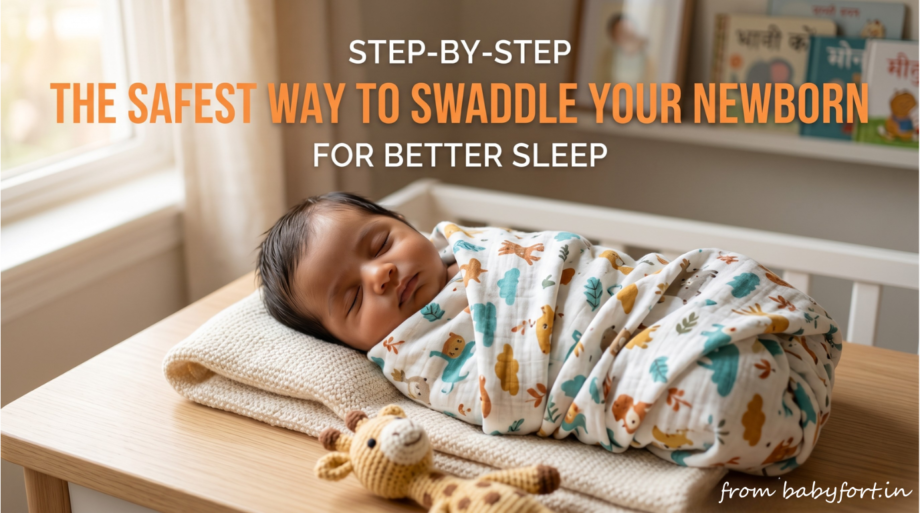
There is a distinct magic to watching an experienced postpartum nurse wrap a newborn. With a few swift, precise folds, they transform a crying, wiggly baby into a calm, content “burrito” who drifts off to sleep within minutes.
When you get home and try it yourself at 2:00 AM, however, it can feel like trying to origami an angry, tiny octopus. The fabric slips, the blanket unravels, and you are left wondering if you are doing it securely or safely.
Swaddling is one of the most effective tools for improving newborn sleep. It recreates the cozy, restrictive pressure of the womb and prevents your baby’s natural moro reflex (that sudden, involuntary arm-startle) from waking them up. But doing it correctly isn’t just about getting a peaceful night’s rest—it’s about safety.
Here is a foolproof, step-by-step guide to mastering the classic diamond swaddle technique while keeping your baby’s hips and breathing completely safe.
Preparation: Choose Your Tools Wisely
Before you fold, make sure you have the right blanket. Standard square receiving blankets are often too small or made from heavy flannel, which can trap heat.
The gold standard for safe swaddling is a large, square 100% organic cotton muslin swaddle (ideally 47″ x 47″). Muslin has a loose, open weave that allows air to circulate, preventing your baby from overheating. It also has a natural, diagonal stretch that lets you wrap firmly without exerting dangerous pressure.
The Safe Diamond Swaddle Method
Follow these four steps to secure your baby perfectly every time.
1.The Diamond Setup:Step 1.
Lay your muslin swaddle flat on a safe, firm surface in a diamond shape, with one corner pointing up. Fold that top corner down about 6 inches toward the center to create a straight edge. Place your baby on their back, positioning their shoulders right along that straight, folded fold line.
2.Secure the Left Side:Step 2.
Gently hold your baby’s right arm flat against their side (they can have a slight natural bend at the elbow). Take the left corner of the blanket, pull it firmly across your baby’s chest, and tuck the edge securely underneath their left side, beneath their back. Their left arm should still be free.
3.Fold the Bottom Up:Step 3.
Take the bottom corner of the diamond and fold it straight up over your baby’s feet. Crucial Safety Rule: Do not pull this fold too tight. Your baby’s legs and hips must be free to bend up and out like a frog. Tightly strapping a baby’s legs straight down can lead to hip dysplasia. Tuck the very tip of this bottom corner into the top fold of the blanket.
4.Secure the Right Side:Step 4.
Hold your baby’s left arm flat against their side. Grasp the remaining right corner of the swaddle, pull it smoothly across your baby’s chest and arm, and wrap it all the way around their body, tucking any excess fabric into the folds to secure it.
The 3 Golden Rules of Swaddle Safety
Once your baby is wrapped, perform this quick 10-second safety check before laying them down in their crib or bassinet:
1. The Two-Finger Chest Test
Place your fingers flat against your baby’s chest underneath the swaddle. You should easily be able to slide two to three fingers between the fabric and their chest. The swaddle needs to be snug enough that it won’t unravel into loose fabric, but loose enough that your baby can expand their lungs fully to breathe.
2. The Hip-Healthy “Frog Leg” Check
Look down at your baby’s lower half. Their legs should not be pinned together or forced straight out. A hip-healthy swaddle allows their legs to naturally fall into an open position, with plenty of room for them to kick their knees up and down. If their legs are completely rigid, loosen the bottom fold immediately.
3. Always on the Back
A swaddled baby must always be placed to sleep on their back. Never place a swaddled baby on their stomach or side, as they cannot use their arms to reposition themselves if their airway becomes blocked.
When is it Time to Stop Swaddling?
Swaddling is a temporary tool meant strictly for the early newborn days.
The Hard Stop Rule: The exact moment your baby shows any signs of attempting to roll over—whether from back-to-front or front-to-back—you must stop swaddling immediately.
For some babies, this milestone happens as early as 8 weeks; for others, it’s around 3 to 4 months. Once they can roll, they need their arms free to push their face away from the mattress to protect their breathing. When that transition day arrives, you can seamlessly shift your muslin swaddles into lightweight stroller blankets or playtime floor mats.
