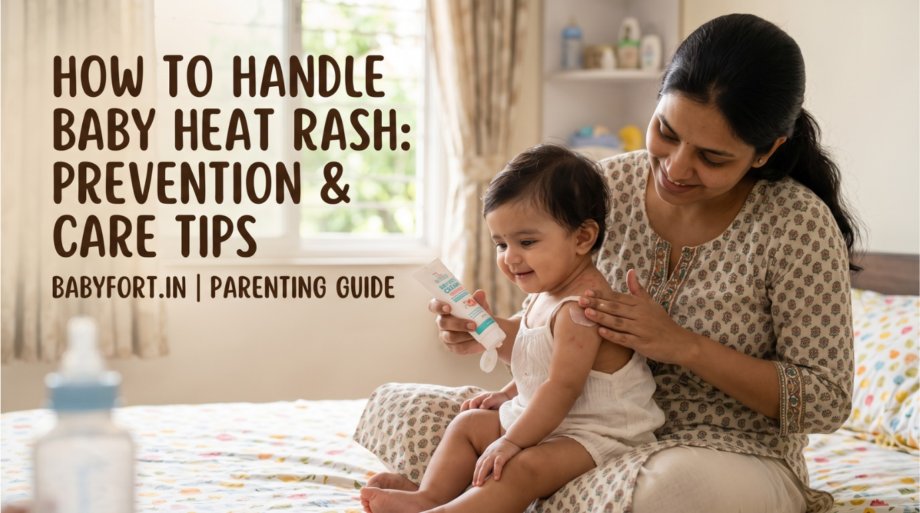
Nothing causes a parent to pause quite like noticing a sudden breakout of tiny red bumps across their baby’s skin. If you’ve just unbuttoned your little one’s onesie and found a cluster of pink or red spots along their neck folds, chest, or diaper line, your mind might instantly race to food allergies or illness.
In most cases—especially during warmer months—the culprit is far simpler and highly manageable: heat rash (also known as miliaria or prickly heat).
Because newborn skin is still adjusting to life outside the womb, it reacts quickly to changes in temperature. Let’s look at why baby heat rash happens, how to identify it, and the exact steps you can take to soothe their skin naturally.
What Does Baby Heat Rash Look Like?
Heat rash usually presents as clusters of tiny, raised bumps that look like small pimples or blisters. On lighter skin tones, they often look pink or red; on darker skin tones, they may look purple, brown, or blend closely with the skin color, though the texture remains noticeably bumpy.
Unlike systemic rashes, heat rash is highly localized. You will almost always find it in areas where skin touches skin or where tight clothing traps friction:
- The deep folds of the neck and chin (often aggravated by drool)
- The chest and upper back
- The armpits and inner creases of the elbows
- Along the elastic waist or leg bands of a diaper
Why Do Babies Get Heat Rash So Easily?
The root cause of heat rash comes down to immature biology. A newborn’s sweat ducts are not fully developed yet. When a baby gets too warm, their body tries to sweat to cool down, but these tiny ducts can easily become plugged or overwhelmed.
Instead of evaporating, the sweat gets trapped just beneath the surface of the skin, causing localized inflammation, redness, and that classic prickly texture.
The 4-Step Care Routine: How to Treat It
If your baby already has heat rash, don’t panic. It is rarely painful, though it can feel slightly itchy or uncomfortable. The goal is simple: cool the skin down, remove friction, and keep it dry.
1. Strip Down and Cool Off
The moment you notice the rash, loosen or remove their clothing. Move your baby to a well-ventilated, cool room with a fan or air conditioning. Getting fresh air directly to the skin is the fastest way to signal the sweat ducts to stop producing excess moisture.
2. Use a Cool Compress
Dampen a clean, ultra-soft cloth—like a multi-layered muslin washcloth—with cool water. Gently press it against the irritated areas for a few minutes to soothe the inflammation. Never rub the skin, as friction will make the bumps swell further. Pat the area completely dry with a fresh towel afterward.
3. Skip the Heavy Creams and Powders
It can be tempting to slather on thick diaper rash creams, petroleum jelly, or lotions to “heal” the bumps. Avoid this entirely. Heavy ointments create an artificial barrier that further plugs the sweat ducts, making the heat rash worse. Similarly, avoid baby powder, which can clump in skin folds and cause breathing irritation. Keep the skin completely bare and dry.
4. Keep Skin Folds Dry from Drool
During teething, constant drool pooling in a baby’s neck folds combined with body heat is a major trigger for heat rash. Keep a lightweight, highly absorbent cloth nearby to gently dab away moisture throughout the day before it sits and inflames the skin.
How to Prevent Heat Rash Before It Starts
Prevention is all about managing your baby’s micro-environment. Here is how to keep their skin clear year-round:
- Dress in Breathable Layers: Ditch synthetic polyester blends, fleece, or heavy elastics. Stick to loose-fitting clothing made from open-weave, natural fibers like 100% organic cotton muslin. Muslin acts like a natural air conditioner, allowing body heat to escape while keeping the skin dry.
- The “One Extra Layer” Rule: As a rule of thumb, dress your baby in the same number of layers you are comfortable wearing in that room, plus a light swaddle if they are sleeping. If you are comfortable in a T-shirt, your baby does not need a heavy velvet sleep sack.
- Check the Nape of the Neck: To see if your baby is running hot, don’t feel their hands or feet (which are naturally cooler). Press your fingers against the back of their neck or their chest. If it feels hot, damp, or sweaty, it’s time to shed a layer.
When to Call the Pediatrician: Heat rash typically clears up on its own within 2 to 3 days once the skin is kept cool and dry. However, you should consult your doctor if the rash lasts longer than a few days, if you notice signs of a secondary infection (such as pus coming from the bumps, increased swelling, or skin that feels hot to the touch), or if the rash is accompanied by a fever.
